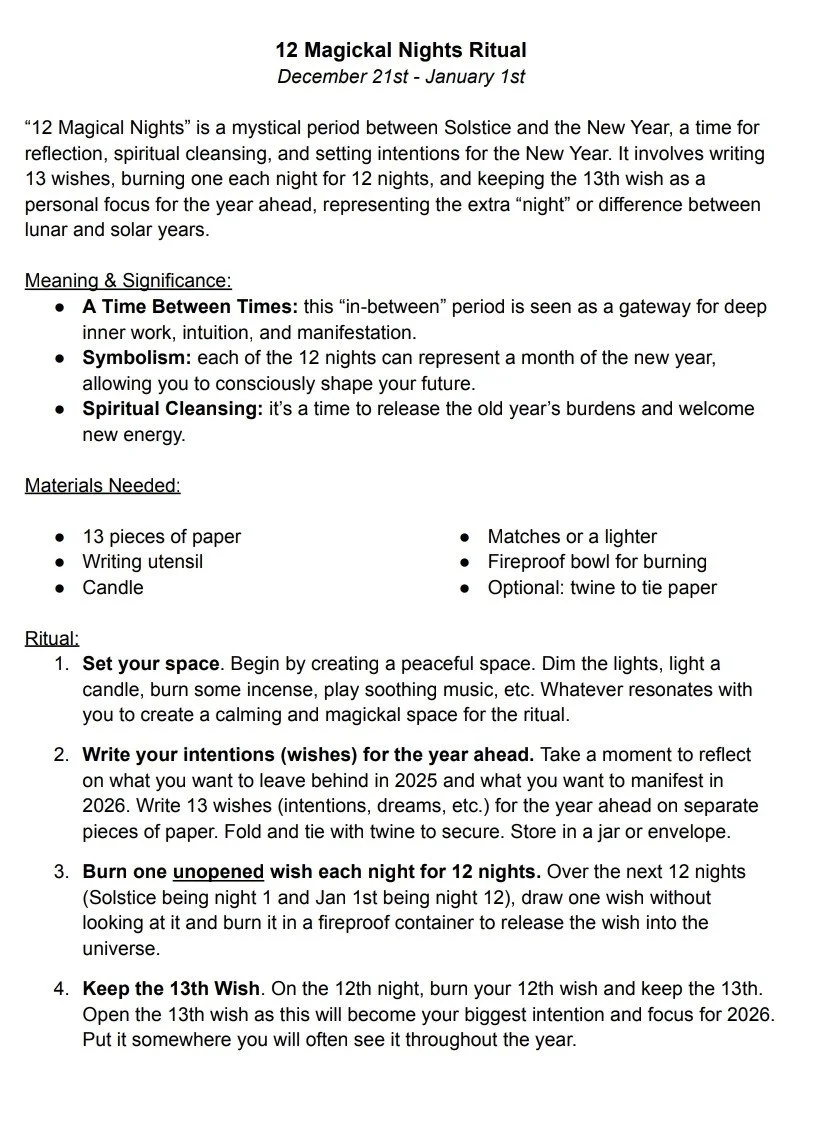
Sabbat: Yule (Winter Solstice), December 21st
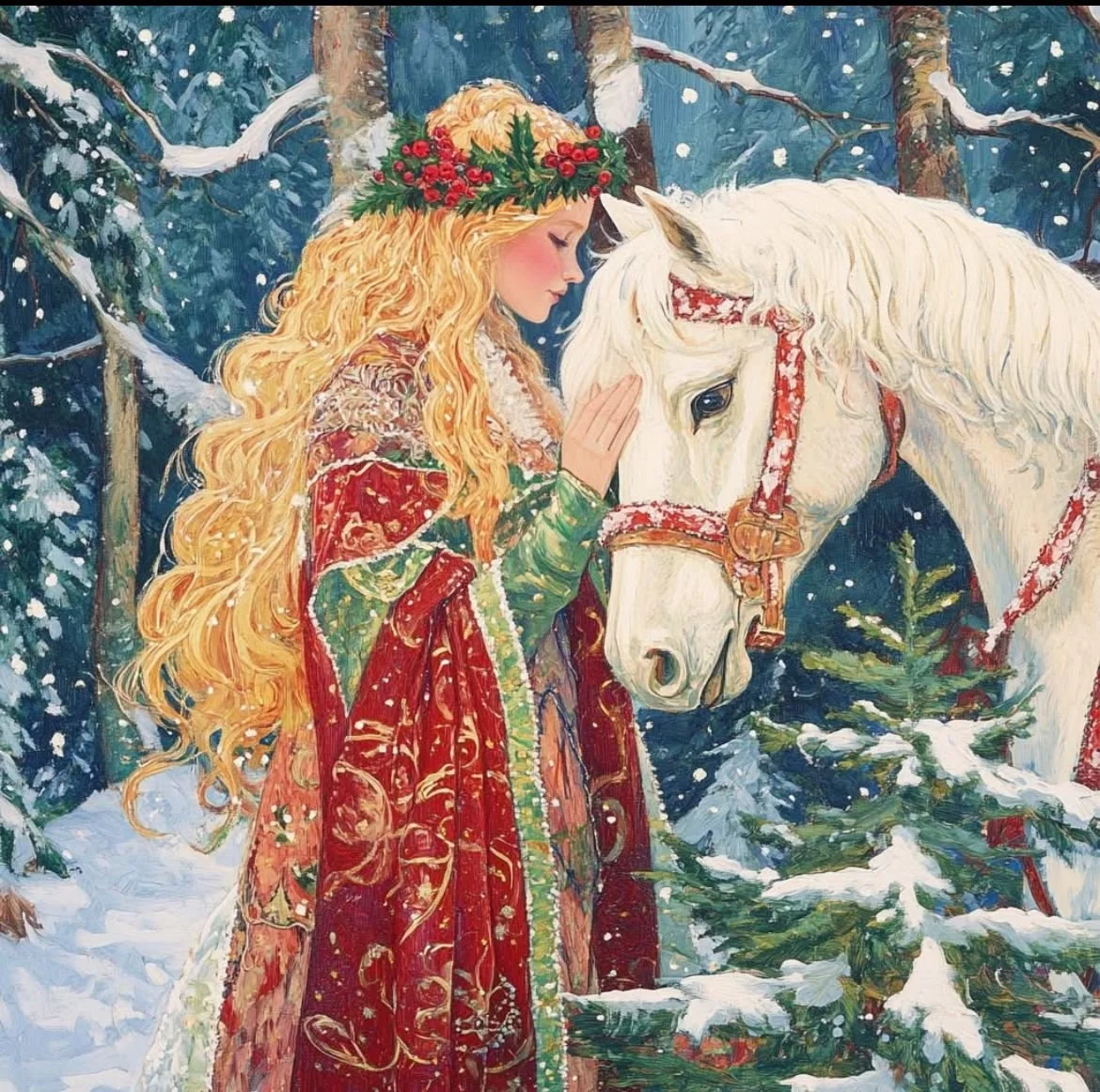
December 20 - 23
The winter solstice is celebrated at this time in the northern hemisphere but it is now time to celebrate the summer solstice (Litha) in the southern hemisphere due to the seasonal differences. Yule is when the dark half of the year relinquishes to the light half. Starting the next morning at sunrise, the sun climbs just a little higher and stays a little longer in the sky each day. Known as Solstice Night, or the longest night of the year, the sun's "rebirth" was celebrated with much joy.
On this night, our ancestors celebrated the rebirth of the Oak King, the Sun King, the Giver of Life that warmed the frozen Earth. From this day forward, the days would become longer. Bonfires were lit in the fields, and crops and trees were "wassailed" with toasts of spiced cider. Children were escorted from house to house with gifts of clove spiked apples and oranges which were laid in baskets of evergreen boughs and wheat stalks dusted with flour. The apples and oranges represented the sun. The boughs were symbolic of immortality (evergreens were sacred to the Celts because they did not "die" thereby representing the eternal aspect of the Divine). The wheat stalks portrayed the harvest, and the flour was accomplishment of triumph, light, and life. Holly and ivy not only decorated the outside, but also the inside of homes, in hopes Nature Sprites would come and join the celebration. A sprig of Holly was kept near the door all year long as a constant invitation for good fortune to visit tthe residents. Mistletoe was also hung as decoration. It represented the seed of the Divine, and at Midwinter, the Druids would travel deep into the forest to harvest it.
The ceremonial Yule log was the highlight of the Solstice festival. In accordance to tradition, the log must either have been harvested from the householder's land, or given as a gift... it must never have been bought. Once dragged into the house and placed in the fireplace it was decorated in seasonal greenery, doused with cider or ale, and dusted with flour before set ablaze by a piece of last years log, (held onto for just this purpose). The log would burn throughout the night, then smolder for 12 days after before being ceremonially put out. Ash is the traditional wood of the Yule log. It is the sacred world tree of the Teutons, known as Yggdrasil. An herb of the Sun, Ash brings light into the hearth at the Solstice. A different type of Yule log, and perhaps one more suitable for modern practitioners would be the type that is used as a base to hold three candles. Find a smaller branch of oak or pine, and flatten one side so it sets upright. Drill three holes in the top side to hold red, green, and white (season), green, gold, and black (the Sun God), or white, red, and black (the Great Goddess). Continue to decorate with greenery, red and gold bows, rosebuds, cloves, and dust with flour.
Many customs created around Yule are identified with Christmas today. If you decorate your home with a Yule tree, holly or candles, you are following some of these old traditions. The Yule log, (usually made from a piece of wood saved from the previous year) is burned in the fire to symbolize the Newborn Sun/Son.
(source: Wicca)
Traditions and Practices
Decorating a real or fake tree indoors with lights and ornaments
Yule log (with three candles)
Making garlands of dried oranges, cranberries, and/or popcorn to hang in the home
Giving gifts to loved ones
Making clove spiked oranges or apples
Decorating the home with boughs and wreaths of winter greenery
Decorating the home with string lights and candles
Handmade ornaments and gifts
Simmer pots with winter herbs and spices
Spending time outside (sledding, skiing, walking, building snowmen, foraging, snowshoeing, etc.)
Hanging mistletoe
Making spiced cider
Cooking warm and delicious meals
Gathering with your community (family, friends, and/or the community at large)
Acts of service (volunteering, doing something special for someone else just because, etc.)
Singing and dancing
Hanging stockings over a fireplace (or wall)
Offering gifts to nature sprites and spirits
Make a Yule wreath
Bake treats and goodies to share
Magickal Correspondences
Deities: Brighid, Isis, Demeter, Gaea, Diana, The Great Mother, Apollo, Ra, Odin, Lugh, The Oak King, The Horned One, The Green Man, The Divine Child
Symbolism: rebirth of the Sun, the longest night of the year, Winter Solstice, introspection, planning for the next calendar year
Symbols: the Holly King, yule log, pagan tree decorated with ornaments and lights, evergreen boughs or wreaths, holly, mistletoe hung in doorways, gold pillar candles, fruit studded with cloves, simmering pots, poinsettias, christmas cactus, stars,
Colors: gold, green, orange, purple, red, silver, white, yellow
Herbs: bayberry, blessed thistle, evergreen, frankincense, holly, laurel, mistletoe, oak, pine, sage, yellow cedar
Traditional Foods: cookies and caraway cakes soaked in cider, eggnog, fruits, ginger tea, nuts, pork dishes, spiced cider, turkey, wassail, or lamb's wool (ale, sugar, nutmeg, roasted apples)
Incense: bayberry, cedar, cinnamon, frankincense, myrrh, pine
Stones: bloodstones, diamonds, emeralds, garnets, rubies
Tarot: the Star, the Fool, the Hermit
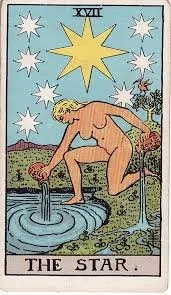
Image: the Star tarot card from the Rider Waite Tarot Deck
The Star major arcana tarot card represents hope, faith, purpose, renewal and spirituality.
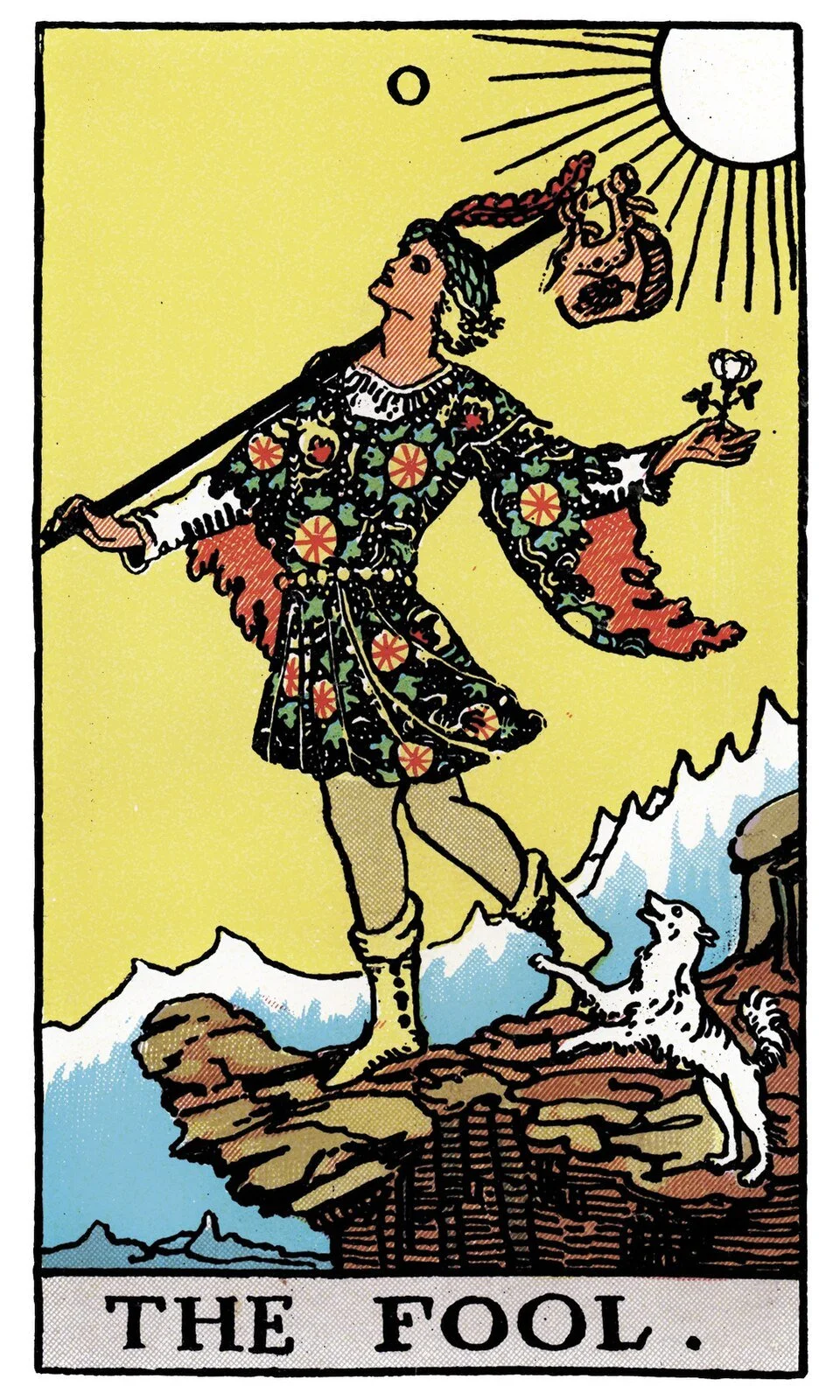
Image: the Fool tarot card from the Rider Waite Tarot Deck
The Fool major arcana tarot card represents beginnings, innocence, spontaneity, and a free spirit.
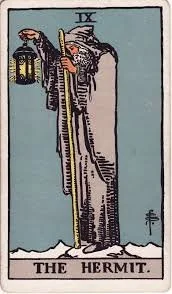
Image: the Hermit tarot card from the Rider Waite Tarot Deck
The Hermit major arcana tarot card represents soul-searching, introspection, inner guidance, and being alone.
Deities Celebrated at Yule
(Read more about each below)
Abrahamic: Angels, The Divine Child, Jesus, Mary/Virgin Mary, Saint Nicholas
Celtic: Brigid, Cernunnos, Danu, The Great Mother, The Green Man, The Holly King, The Horned One, Lugh, the Oak King
Egyptian: The Divine Child, Horus, Isis, Ra/Re
European/Germanic: Frau Perchta/Percht/Berchta, The Divine Child, The Great Mother, The Green Man, The Holly King, The Horned One, Krampus, the Oak King, Saint Nicholas, Santa Claus,
Greek: Apollo, Demeter, the Divine Child, Dionysus, Gaia/Gaea, Pan
Hindu: Krishna
Norse: Baldr/Balder and Odin
Roman: Diana and Sol/Sol Invictus

Angels are spiritual beings found in many religious and mythological traditions, often serving as messengers or intermediaries between the divine and humanity. In Christianity, Judaism, and Islam, angels are seen as protectors, guides, and bearers of divine will, embodying purity, wisdom, and benevolence. They are frequently depicted as radiant, winged figures, symbolizing light, guidance, and spiritual support. Angels represent the presence of the sacred in the mortal world, offering comfort, inspiration, and a reminder of the connection between humans and higher realms.
Apollo, the Greek god of the sun, prophecy, music, and healing, is a symbol of light, order, and harmony. Son of Zeus and Leto, and twin brother of Artemis, he wields a golden lyre and bow. As the patron of the Oracle of Delphi, he represents wisdom and divine foresight. Apollo also governs medicine, poetry, and the arts, embodying both creative and destructive power.
Balder (also spelled Baldr) is a beloved god in Norse mythology, known for his radiance, beauty, purity, and gentle nature. He is the son of Odin and Frigg, and the twin brother of Hodr. Balder is often seen as a god of light, peace, and joy, and his presence among the gods symbolizes harmony and hope.
His most famous myth involves a prophecy that he would die, prompting his mother Frigg to extract oaths from all things in the world not to harm him—except for mistletoe, which she overlooked. The trickster god Loki exploited this by crafting a mistletoe spear or dart and tricking the blind god Hodr into killing Balder with it. His death marked the beginning of the events leading to Ragnarök, the end of the world.
Balder’s story represents innocence lost, tragic fate, and the fragility of peace, yet it also holds a promise of renewal, as some myths say he will return after Ragnarök to help rebuild the world.
Brigid is one of the most beloved and enduring goddesses in Irish mythology, associated with healing, poetry, smithcraft, fertility, and the hearth. A member of the Tuatha Dé Danann and daughter of the Dagda, she bridges the worlds of creativity, craftsmanship, and nurturing care. Brigid is a triple goddess, often seen as embodying three aspects: poet, healer, and smith—the core sacred arts of Celtic tradition.
Her worship was so widespread that she was later syncretized into Saint Brigid in Christian tradition, preserving her legacy as a protector of home, hearth, and the land. She is honored at Imbolc (February 1st), a festival marking the return of light and the stirrings of spring. Brigid represents inspiration, transformation, and the sacred power of life in all its forms.
Cernunnos is a horned Celtic god associated with nature, fertility, animals, and the wilderness. Often depicted with antlers or horns, he is a symbol of the primal connection between humans and the natural world. Cernunnos is frequently shown surrounded by animals, particularly stags, serpents, and other forest creatures, emphasizing his role as a protector and ruler of the wild. He is also linked to the cycles of life, death, and rebirth, making him a god of abundance and regeneration. Although details about Cernunnos are somewhat scarce, he is often regarded as one of the most significant deities in Celtic mythology, embodying the power of nature and the animal kingdom.
Danu is the revered mother goddess of the Tuatha Dé Danann, the legendary divine race in Irish mythology whose name means “People of the Goddess Danu.” Though little direct myth about her survives, Danu is considered a primordial force of fertility, wisdom, rivers, and the earth itself. She represents the source of life, nurturing both gods and mortals.
As an ancestral figure, Danu is linked to flowing water and sacred rivers, symbolizing abundance, inspiration, and spiritual nourishment. She embodies the power of the land, sovereignty, and the deep, enduring strength of the divine feminine. Mysterious yet foundational, Danu stands as the great mother—a wellspring of life, magic, and ancestral memory in Celtic tradition.
Demeter, the Greek goddess of agriculture, fertility, and the harvest, ensures the cycles of growth and sustenance. She is best known for her deep connection to her daughter, Persephone, whose abduction by Hades led to the changing seasons. In her grief, Demeter withheld fertility from the earth, causing winter, until Persephone’s return each spring. Worshiped in the Eleusinian Mysteries, she symbolizes motherhood, life’s abundance, and the balance between loss and renewal.
Diana is the Roman goddess of the hunt, the moon, wild animals, and childbirth, equivalent to the Greek goddess Artemis. She is often depicted as a youthful, athletic figure with a bow and quiver, accompanied by a deer or hunting dogs. A virgin goddess, Diana is fiercely independent and protective of women, especially during childbirth, as well as of nature and the wilderness.
She is also associated with the moon, particularly in later Roman worship, and came to be linked with lunar cycles and feminine power. As a triple goddess figure, Diana was sometimes worshipped in her aspects as maiden (huntress), mother (nurturer), and crone (protector of the underworld). She represents strength, purity, freedom, and the sacred balance between civilization and nature.
Dionysus, the Greek god of wine, revelry, and ecstasy, represents both joy and chaos. Son of Zeus and the mortal Semele, he embodies transformation, inspiring creativity, theater, and divine madness. As a god of fertility and the vine, he blurs the line between civilization and wild nature. Worshiped through ecstatic rituals and mystery cults, Dionysus symbolizes liberation, pleasure, and the balance between order and excess.
The Divine Child is an archetype found in many mythological and spiritual traditions. It represents innocence, new beginnings, hope, and the potential for future transformation. Often, the Divine Child is:
- A symbol of rebirth or renewal, appearing at turning points in mythic cycles.
- A bridge between the human and the divine, embodying purity or untapped potential.
- A figure destined for greatness, whose early life may involve miraculous birth, special protection, or prophetic significance.
Different cultures have their own versions of this archetype—such as Horus in Egypt, Krishna in Hinduism, the infant Jesus, or the infant Dionysus in Greece—but the core theme remains the emergence of new possibility and sacred potential.
Frau Perchta (also called Percht or Berchta) is a figure from Alpine and Germanic folklore associated with the winter season and the Twelve Days of Christmas. She is often depicted as a dual-natured spirit: beautiful and benevolent to those who follow tradition, but fearsome and punishing to the lazy or disobedient. Frau Perchta is said to roam the countryside, overseeing spinning, weaving, and other domestic tasks, ensuring proper behavior and rewarding diligence. She embodies the wild, mysterious energy of winter, serving as both a guardian of tradition and a reminder of the balance between reward and consequence in the seasonal cycle.
Gaea (Gaia) is the primordial Greek goddess of the Earth, the mother of all life. She emerged from Chaos and gave birth to the sky (Uranus), the sea (Pontus), and the Titans, laying the foundation for the cosmos. Revered as a nurturing yet powerful force, she played a key role in overthrowing Uranus and later supported the downfall of Cronus. Gaea represents fertility, creation, and the ever-sustaining power of nature.
The Great Mother is a widespread archetype representing creation, fertility, nourishment, and the sustaining power of the Earth. Found in many cultures under various names, she embodies both the generative and cyclical aspects of life—birth, growth, death, and renewal. As the source of abundance, protection, and natural wisdom, the Great Mother is often associated with the land itself, the womb of all life, and the rhythms that govern the natural world. She stands as a universal symbol of nurturance, divine femininity, and the profound interconnectedness between humanity and the cosmos.
The Green Man is a figure symbolizing nature’s vitality, seasonal renewal, and the deep interconnectedness between humans and the natural world. Most commonly depicted as a face formed from or surrounded by leaves, vines, or branches, he appears throughout European folklore, medieval architecture, and modern pagan traditions. The Green Man embodies the cycle of growth, decay, and rebirth, echoing the rhythms of the forest and the turning of the seasons. Though not tied to a single mythology, he endures as a powerful archetype of wild nature, fertility, and the enduring spirit of the living earth.
The Holly King is a figure from modern pagan and folkloric traditions who embodies the dark half of the year, ruling from the summer solstice to the winter solstice. He is often portrayed as a powerful, wintery counterpart to the Oak King, with whom he engages in an eternal cycle of seasonal rebirth and decline. The Holly King represents introspection, rest, endurance, and the quiet strength found in the colder, darker months. His symbolism reflects the natural world’s retreat and renewal during winter, reminding us of the cyclical balance between growth and stillness.
The Horned One is a primal deity archetype associated with wilderness, fertility, and the untamed forces of nature. Often depicted with antlers or horns, he represents the vigor of wildlife, the cycles of life and death, and the raw, instinctive energies of the natural world. In various pagan and folkloric traditions, the Horned One is linked to the hunt, virility, and the balance between creation and destruction. He stands as a guardian of animals and wild places, embodying both the mystery and vitality of the living earth.
Horus is one of the most important gods in Egyptian mythology, associated with the sky, kingship, protection, and divine justice. Often depicted as a falcon or a man with a falcon head, Horus' right eye symbolized the sun and his left, the moon—making him a powerful celestial deity.
He is best known as the son of Osiris and Isis, and the hero of the mythic battle against his uncle Set, who murdered Osiris. After defeating Set, Horus became the rightful ruler of Egypt, and every pharaoh was considered his living embodiment on Earth.
Horus represents strength, honor, rightful leadership, and the enduring power of good over chaos. His Eye of Horus became a symbol of protection, healing, and watchfulness across Egyptian culture.
Isis is one of the most revered goddesses in Egyptian mythology, known for her roles as the goddess of magic, healing, motherhood, protection, and divine wisdom. She is the wife of Osiris and the mother of Horus, and is central to one of Egypt’s most important mythological stories—resurrecting Osiris after his murder by Set and protecting their son Horus until he could reclaim his rightful place.
Often depicted with a throne-shaped crown or with wings outstretched in protection, Isis was worshipped for her deep compassion, magical skill, and fierce devotion. Her influence extended far beyond Egypt, spreading throughout the Greco-Roman world.
Isis symbolizes divine love, resilience, feminine power, and the ability to heal, protect, and transform through both grief and grace.
Jesus (known as Isa in Islam) is one of the most significant figures in Abrahamic religions, though understood differently across traditions. In Christianity, Jesus is the Son of God, the Messiah, and the savior of humanity. He is believed to be both fully divine and fully human, sent to bring salvation through his teachings, crucifixion, and resurrection. His life exemplifies love, sacrifice, and forgiveness, and his followers believe he fulfilled Old Testament prophecies and opened the path to eternal life.
In Islam, Isa is honored as a great prophet and messenger, born of the Virgin Mary (Maryam) by divine command. He is revered for his miracles, wisdom, and role in guiding the Children of Israel, though Islam rejects his divinity and crucifixion, believing instead that he was taken up by God and will return at the end of time.
In both traditions, Jesus/Isa is a symbol of divine mercy, truth, and spiritual transformation, deeply shaping religious thought, history, and devotion across the world.
Krampus is a fearsome figure from Central and Eastern Alpine folklore, traditionally associated with the Christmas season. Often depicted as a horned, goat-like creature with chains, hooves, and a long tongue, he serves as a dark counterpart to the benevolent Saint Nicholas. While Saint Nicholas rewards well-behaved children, Krampus is said to punish the naughty, sometimes carrying switches or a basket for frightening misbehavers. Rooted in older pagan winter traditions, Krampus represents the harsher, wilder forces of the season and the balance between reward and consequence within holiday lore.
Krishna is regarded as the eighth avatar of Vishnu, the preserver god of the Trimurti (the Hindu trinity of creation, preservation, and destruction). Krishna is known for his divine wisdom, charisma, compassion, and his role in guiding humanity toward spiritual realization. He is often depicted as a young flute-playing shepherd surrounded by his devotees and the divine gopis (milkmaids), representing the joy and ecstasy of divine love.
One of the most famous aspects of Krishna’s life is his childhood in the village of Vrindavan, where he performed miracles such as lifting the Govardhan Hill to protect his devotees from a storm, and his playful love affair with Radha, symbolizing the union of the human soul and the divine. His flute music represents the call of the divine, enticing the soul toward liberation.
Krishna is also the central figure in the Bhagavad Gita, a sacred text of Hindu philosophy, in which he serves as a divine charioteer and offers profound teachings to the warrior Arjuna on the battlefield of Kurukshetra. In this dialogue, Krishna discusses the nature of duty (dharma), karma (the law of action and its consequences), devotion (bhakti), and the nature of the self (atman).
Krishna's teachings emphasize the importance of selfless action, devotion to God, and the pursuit of spiritual truth through love, humility, and surrender. He embodies the divine play (Lila), the eternal dance between the human and the divine, inviting all to participate in the joyful celebration of life and divine love.
Lugh is one of the most celebrated gods in Irish mythology, known as a master of many skills, including war, crafts, poetry, music, magic, and more. Often called Lugh Lámhfhada ("Lugh of the Long Arm") for his skill with a spear, he is a shining warrior of the Tuatha Dé Danann and a symbol of brilliance, ingenuity, and leadership.
Lugh played a key role in the Second Battle of Mag Tuired, where he led the gods to victory against the Fomorians and slew his grandfather, the destructive giant Balor. He is also associated with the harvest festival Lughnasadh, which he established in honor of his foster mother, Tailtiu.
As a god of many talents, Lugh represents excellence, versatility, and the ideal heroic figure—one who unites wisdom, strength, and creativity to bring balance and prosperity to his people.
Mary, also known as the Virgin Mary, is a central figure in Christianity, revered as the mother of Jesus Christ. She symbolizes purity, compassion, and maternal care, and is honored in numerous feasts throughout the liturgical calendar, including the Feast of the Immaculate Conception on December 8 and Christmas on December 25. Mary is often seen as an intercessor between humanity and the divine, embodying grace, devotion, and the nurturing aspects of the sacred feminine. Her role highlights themes of humility, faith, and the miraculous nature of life.
The Oak King is a figure from modern pagan and Celtic-inspired traditions who represents the light half of the year, reigning from the winter solstice to the summer solstice. Often depicted as a vigorous, leafy warrior of the forest, he embodies growth, vitality, and the return of the sun’s strength after the darkest days. The Oak King is traditionally seen in mythic opposition to the Holly King, engaging in an eternal symbolic battle that marks the cyclical rhythm of the seasons. He represents renewal, life, and the forward momentum of nature as the year progresses toward abundance and warmth.
Odin is the chief god in Norse mythology and one of the most complex and revered figures in the pantheon. He is the Allfather, the ruler of the Aesir gods, and the god of wisdom, war, death, poetry, and magic. Odin is associated with knowledge, particularly through his sacrifice of one of his eyes to drink from the Well of Mimir, which granted him vast wisdom. He is also known for his pursuit of runes (ancient symbols of magic and power), which he obtained through self-sacrifice, hanging himself on the Yggdrasil, the World Tree, for nine days and nights.
Odin is a god of war and victory, leading the Valkyries to bring the bravest warriors who die in battle to Valhalla, his hall in Asgard, where they prepare for Ragnarök (the end of the world). Despite his focus on warfare, Odin is also a god of fate, guiding the destinies of both gods and mortals. He is accompanied by his two ravens, Huginn (thought) and Muninn (memory), who fly across the world and bring back information to him.
Odin's symbol is the wolf, and he is often depicted with his two wolves, Geri and Freki, and his famous spear, Gungnir, which never misses its mark. Odin's nature is multifaceted—he is a god of sacrifice and seeking wisdom, yet also embodies the harsh realities of war, death, and ruthless justice.
Through his wisdom, leadership, and understanding of the cycles of life and death, Odin represents the pursuit of knowledge at any cost and the balance between creation and destruction. He is a central figure in Norse mythology, embodying the values of strength, honor, and sacrifice.
Pan is the Greek god of the wild, shepherds, and nature. Depicted as a half-man, half-goat, he is known for playing the panpipes and causing "panic" through sudden fear. Pan embodies the untamed aspects of nature and is a protector of animals and the countryside. He also has connections to fertility and the natural world.
Ra (also spelled Re) is the ancient Egyptian sun god and one of the most powerful and revered deities in the entire pantheon. He represents the sun at its zenith, creation, life, and divine authority. Often depicted as a falcon-headed man crowned with a sun disk encircled by a cobra, Ra journeys across the sky each day in his solar barque, bringing light to the world.
At night, Ra travels through the underworld (Duat), where he battles the chaos serpent Apep (Apophis) before being reborn at dawn. In some traditions, he merges with other gods, such as Atum-Ra (sunset aspect) and Amun-Ra (creator and hidden power).
Ra is the creator of all life, the father of the gods, and the embodiment of order, light, and kingship. Pharaohs were believed to be his earthly sons, and temples across Egypt, especially in Heliopolis, were dedicated to his worship. Ra symbolizes the cycle of life, death, and rebirth, and the triumph of light over darkness.
Saint Nicholas was a 4th-century Christian bishop from Myra, in what is now Turkey, known for his generosity, compassion, and protection of the vulnerable. Celebrated for performing miracles and secretly giving gifts to those in need, he became the patron saint of children, sailors, and the poor. Over centuries, his legend spread throughout Europe, inspiring numerous cultural traditions and eventually evolving into the modern figure of Santa Claus. Saint Nicholas remains a symbol of kindness, charity, and the spirit of giving.
Santa Claus is a legendary figure associated with Christmas, known for bringing gifts to children around the world on the night of December 24th. His modern image—a jolly, bearded man in red with a sleigh and reindeer—evolved from traditions surrounding Saint Nicholas, Dutch Sinterklaas, and other European winter gift-bringers. Santa Claus embodies generosity, joy, and the spirit of giving, inspiring wonder and celebration during the holiday season. He serves as a cultural symbol of kindness, festive cheer, and the magic of childhood imagination.
Sol is the Roman god and personification of the sun, equivalent to the Greek god Helios. He is often depicted as a radiant, golden figure driving a chariot across the sky, pulled by fiery horses, bringing daylight to the world. Although initially a minor deity in early Roman religion, Sol Invictus ("the Unconquered Sun") rose to prominence during the later Roman Empire, especially under emperors like Aurelian, who promoted him as a supreme cosmic power.
Sol symbolizes light, vitality, order, and the eternal cycle of day and night. His rising and setting marked the passage of time and the promise of renewal, making him a powerful symbol of life, stability, and divine presence shining over all creation.