Period Closet Project
We believe accessible menstrual hygiene is a fundamental human right.
That’s why we are committed to providing free menstruation products to anyone in need in our community regardless of gender-identity, sexuality, immigration status, religious beliefs held (or lack thereof), income, age, race. Orders are delivered discreetly & free of charge right to their doorstep. Serving Clarkston, WA, Lewiston, ID, Asotin, WA, and Lapwai, ID.
Access our free resource guide to find valuable information relating to menstrual health, resources for parents/caregivers/educators, PMDD, perimenopause, and the relationship between neurodiversity and hormones.
To understand why this mission matters to us, it’s important to first understand what Period Poverty and Menstrual Equity are—and why they are vital issues in our community and beyond.
Period Poverty:
“Period poverty is defined as inadequate access to menstrual hygiene tools and education, including but not limited to sanitary products, washing facilities and waste management.”
- Shelby Davies, MD, Grace Clarke, Noreena Lewis, JD. Period Poverty: The Public Health Crisis We Don't Talk About
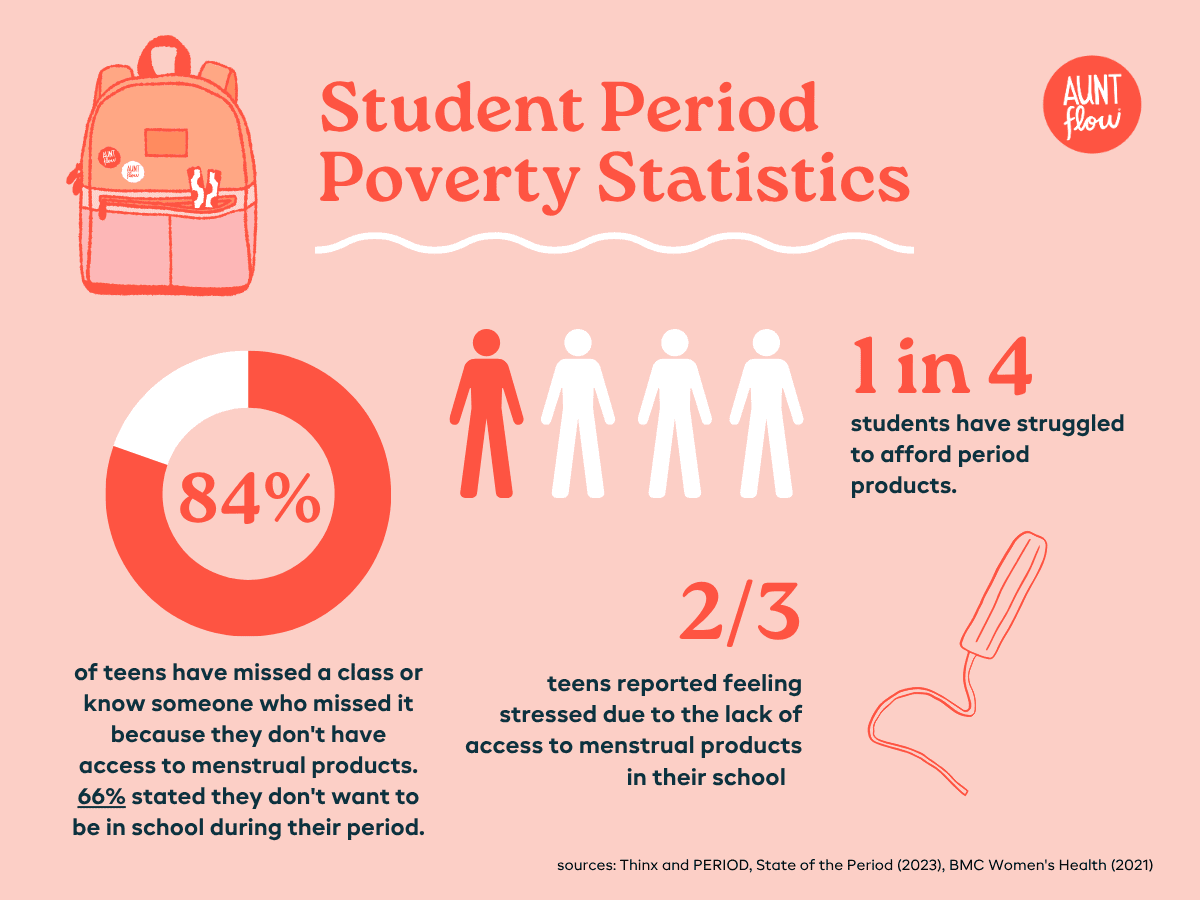
According to the United Nations Population Fund, period poverty refers to the struggle many low-income menstruators face in affording essential menstrual products. The term also highlights the broader economic vulnerability caused by the ongoing financial burden of menstruation. This includes not only pads and tampons, but also related expenses like pain relief medication, hygiene supplies, and underwear.
When individuals can’t afford menstrual products, they may be forced to miss school or work, leading to long-term consequences for their education, income, and overall well-being. Period poverty can also worsen existing inequalities, sometimes pushing menstruators toward unsafe or unsanitary coping methods that further impact their health and dignity.
(source: UNFPA. Menstruation and human rights - Frequently asked questions.
Menstrual Equity:
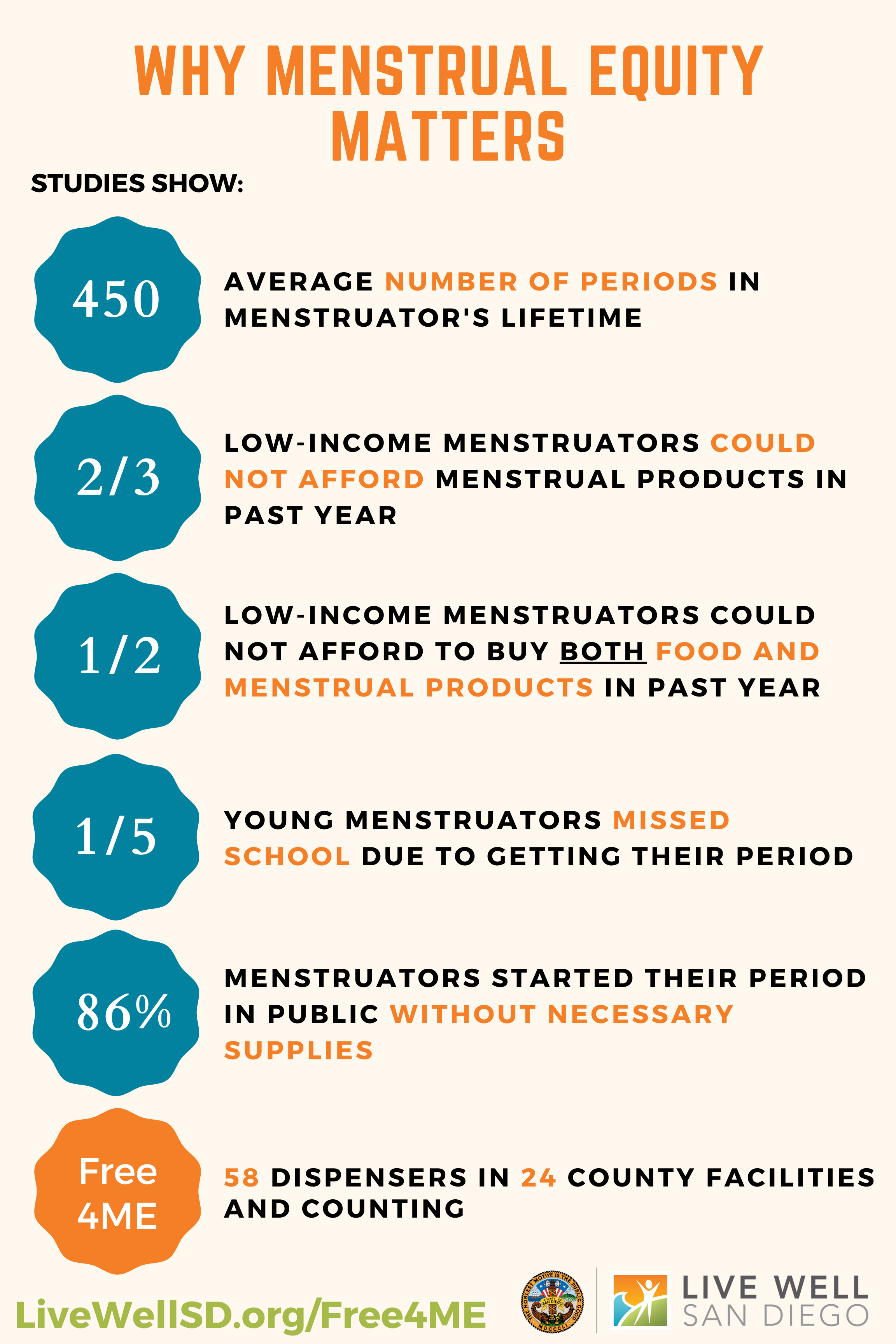
“The most commonly recognized definition refers to the affordability, accessibility and safety of menstrual products. But menstrual equity is not just defined by products — it is also about education and reproductive care. It’s about making sure that people have the needs, support, and choices to decide how they want to take care of their menstrual health. And it’s about finally ending the stigma around periods that has prevented not only decision-makers, but also healthcare providers, educators and individuals from ensuring that menstrual health is a priority.”
- Women’s Voices for the Earth.What Does Menstrual Equity Mean to You?
500 million people lack access to menstrual products and hygiene facilities.
- Journal of Global Health Reports
Michel J, Mettler A, Schönenberger S, Gunz D. Period poverty: why it should be everybody’s business. Journal of Global Health Reports. 2022;6:e2022009. doi:10.29392/001c.32436

Tax on menstrual products in the US ranged from 4.7% to 10% in 2019.
- Journal of Global Health Reports
Michel J, Mettler A, Schönenberger S, Gunz D. Period poverty: why it should be everybody’s business. Journal of Global Health Reports. 2022;6:e2022009. doi:10.29392/001c.32436
With the support of community fundraising and donations, we can work together to end period poverty in the Lewis-Clark Valley.
Consider donating to help a menstruator in-need in our community.
Explore donation options here.
We accept the following products — MUST be new and factory sealed:
Tampons (all sizes)
Disposable Pads (all sizes)
Daily Liners (all sizes)
Reusable Pads (all sizes)
Menstrual Cups
Menstrual Rings/Discs
Condoms
Pregnancy Tests*
Emergency Contraceptives*
*We can not accept or distribute expired products. Please check expiration dates before donating.
Donations can be dropped at a donation box location, or we can arrange pick up. For donation drop locations and more information, visit the ‘Donate’ page. We greatly appreciate any and all donations.